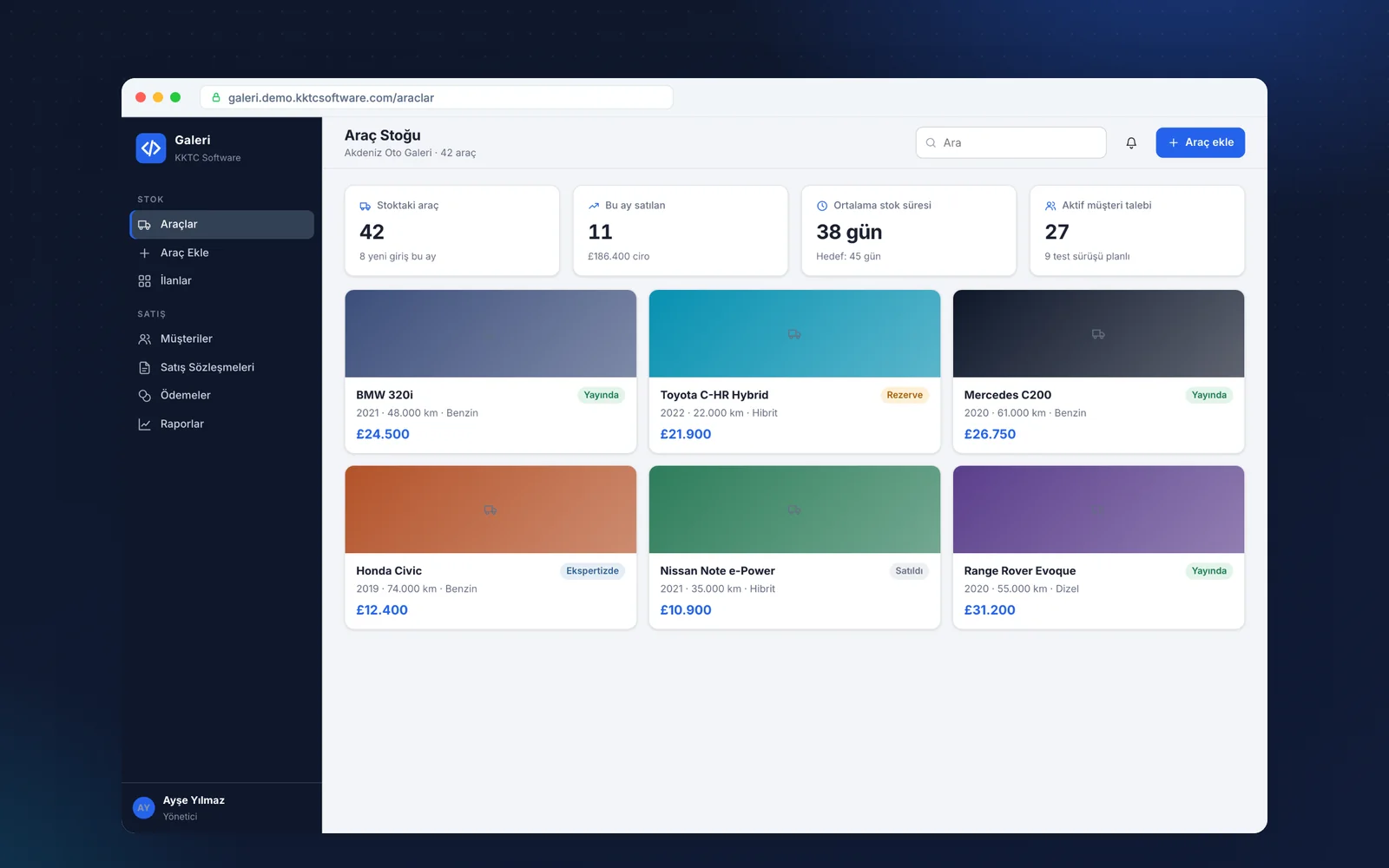
A car dealer's day is spent photographing cars, entering listings, answering messages and meeting customers. Entering the same car separately on the website, social media and listing sites takes time and leaves listings open for cars that have already been sold.
One vehicle card, the same information everywhere
For each car, the make, model, year, mileage, fuel, transmission, photos and price are entered once. The dealer's website is fed from this card; when the car is sold, it becomes "sold" everywhere in one click.
Cost and profitability
When a car's purchase price, expenses (maintenance, paint, inspection, customs, etc.) and sale price are recorded, the real profit on each car is visible. Reports show which types of car sell faster and more profitably.
Customer enquiries and follow-up
Recording a customer who says "I'm looking for an automatic SUV from 2018 or later" and letting them know when a suitable car arrives brings sales. This is a CRM system adapted to a car dealership. Which salesperson is talking to which customer is also tracked.
Social media posts
For each new car, social media images and descriptions can be prepared automatically from ready templates. Automations like this save hours every day.
After-sales
Sales documents, payment plans, promissory note or instalment tracking and transfer procedures are kept in the system. Sending service reminders to owners of cars you've sold also increases customer loyalty.
Dealer website
Customers should be able to search cars with filters (price, year, fuel, transmission). Giving each car its own page helps you appear in "car for sale" searches on Google. For details, see our car dealer management system page or contact us.
For after-sales maintenance and repair of the cars at your dealership, also take a look at our car service management software.